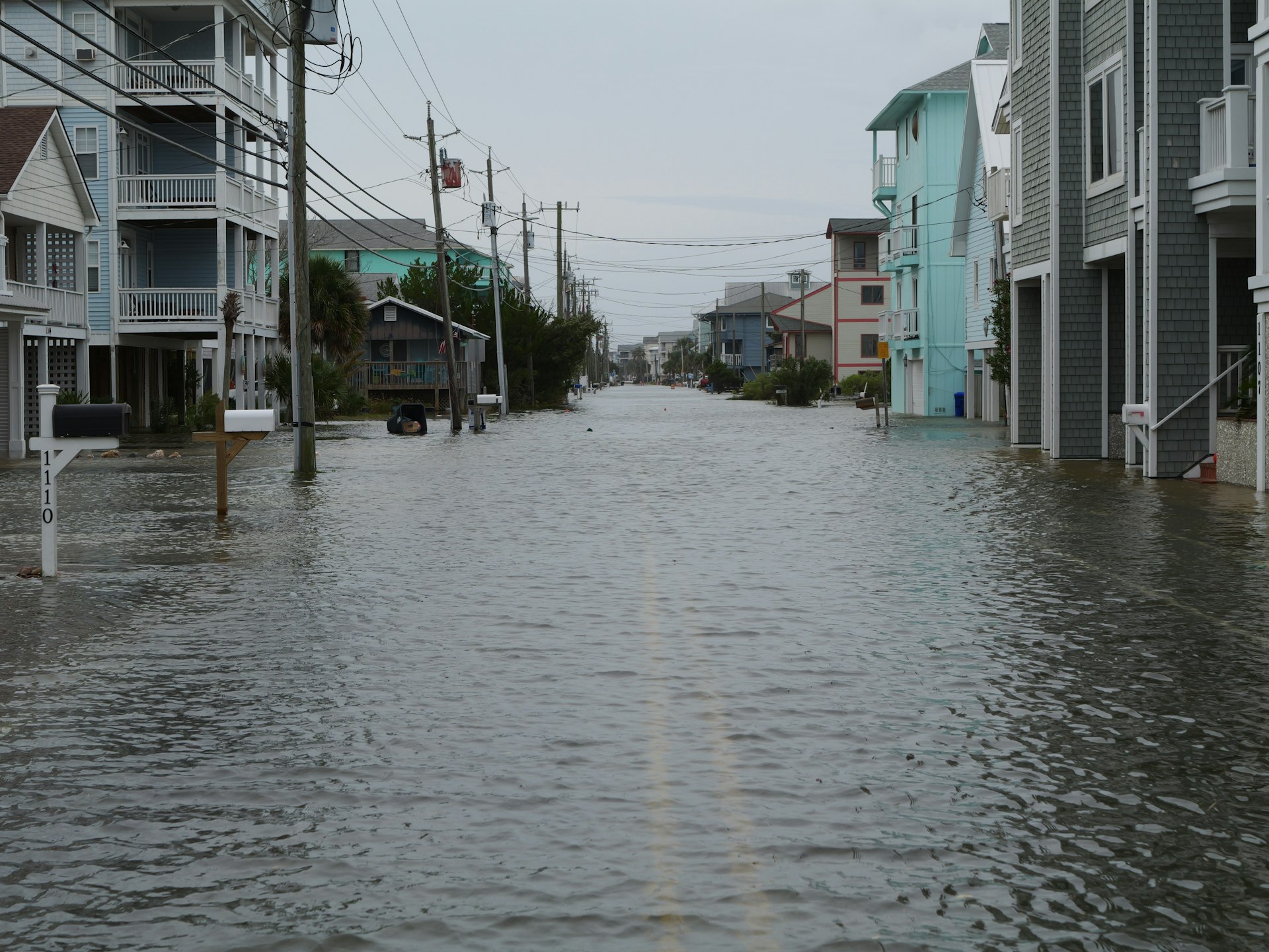
Federal flood insurance has spent most of its history priced below the risk it insures. The gap between what policyholders pay and what floods cost has always had a patient lender: the U.S. Treasury.
The National Flood Insurance Program (NFIP) — the country's main source of flood coverage — ran up about $36.5 billion in Treasury borrowing between 2005 and 2023, by the Government Accountability Office's count. Congress canceled $16 billion of that debt outright in October 2017, the first cancellation in the program's history, so that claims from Hurricanes Harvey, Irma, and Maria could keep flowing. The borrowing resumed anyway: FEMA drew another $2 billion in February 2025, leaving the program $22.5 billion in the red.
The price was the problem
The GAO's diagnosis comes down to one comparison. In its July 2023 review, the median flood policy ran about $689 a year as of December 2022, while pricing that same median policy to its full risk would take $1,288. Nobody was asked to make up the difference at the counter. The program ate the shortfall, and when the shortfall outran revenue, it went back to the Treasury window.
A more accurate price
That's the gap FEMA started closing in October 2021 with Risk Rating 2.0, which retired the broad flood-zone averages and built a price for each individual property. On actuarial grounds, the GAO endorsed the change — "improves actuarial soundness" is in the title of its report. Every house, at last, quoted its own risk.
The trouble is that an honest quote is a bigger quote for the houses that flood the most — and behavior shifted. In a study published in the Journal of Catastrophe Risk and Resilience in December 2025, researchers measured what happened to NFIP enrollment once the new prices arrived: new policies dropped 11% to 39% and existing policies fell 5% to 13%, with the steepest declines where premiums climbed the most — and, above all, in lower-income zip codes.
The moment the premium started telling the truth about flood risk, the households it priced hardest — the same ones with the least room in the budget — were the first to walk away from protection.
What pooling can't survive
Pooling is the entire engine of insurance: a crowd pays in so the unlucky few can be made whole. But the engine only serves a homeowner who stays in the crowd. Move each home's price toward its individual risk, and the exits cluster exactly where the water does — the most exposed addresses carry the largest premiums, so they leave first. The community inherits a second-order bill: its most flood-prone, least resourced households end up standing outside the pool.
The long runway
None of it lands at once. Under the Homeowner Flood Insurance Affordability Act, premiums on most primary residences climb at most 18% a year (25% for other property categories), which stretches the trip from subsidized price to full-risk price across more than a decade. The GAO projects that 95% of today's policies won't complete that trip until 2037 — and that the program will collect roughly $27 billion less than its risk costs along the way.
The gradualism is deliberate; Congress preferred a slow correction to sticker shock. But a slow correction carries its own cost: every year premiums spend below true risk is another year the NFIP holds losses it hasn't charged for. If a bad enough season arrives before the runway ends, the backstop sits where it always has — with the Treasury, which is to say taxpayers. That arrangement isn't theoretical. The $16 billion Congress wiped away in 2017 was never repaid; it was simply absorbed.
What this means if you're pricing a house near water
A flood premium quoted today may not be the durable price. As of the GAO's 2023 review, only about a third of policyholders were paying full-risk premiums; everyone else is somewhere on the statutory escalator, climbing toward a number that can be nearly double where they started. On a long-subsidized property, the flood insurance line in your carrying costs is a discount with an expiration date.
This is the same repricing mechanism I wrote about in Your Insurance Quote Is a Climate Forecast — except here the forecast arrives muffled by statute, 18% a year at a time. The premium will eventually say what the risk costs. The hazard data says it now.
Sources
- U.S. Government Accountability Office, GAO-23-105977, "Flood Insurance: FEMA's New Rate-Setting Methodology Improves Actuarial Soundness but Highlights Need for Broader Program Reform," July 2023. $36.5 billion borrowed from the Treasury since 2005, with $20.5 billion still owed as of April 2023; median premium $689 vs. full-risk $1,288 as of December 2022; about one-third of policyholders at full-risk premiums; 95% of policies projected to reach full-risk pricing by 2037; estimated $27 billion premium shortfall.
- Gourevitch, Snyder and Kousky, "Effects of Risk-based Pricing Reform on Flood Insurance Uptake," Journal of Catastrophe Risk and Resilience, December 16, 2025. New policies down 11–39% and existing policies down 5–13% depending on premium increase; effects largest in lower-income zip codes.
- Congressional Research Service, IN10784, "National Flood Insurance Program Borrowing Authority." $16 billion of NFIP debt canceled October 26, 2017; $22.525 billion owed to the Treasury following the February 2025 borrowing.
- FEMA, "FEMA Exercises Borrowing Authority for National Flood Insurance Program," February 10, 2025. $2 billion drawn from the Treasury.
- Congressional Research Service, R44593, "Introduction to the National Flood Insurance Program (NFIP)." Statutory annual premium increase caps: 18% for most primary residences, 25% for other property categories, under the Homeowner Flood Insurance Affordability Act of 2014.
Figures current as of September 2026.