Committed funding and money in hand are not the same thing, and the gap between them can stall a project for years.
It sounds like a paradox. It is mostly a calendar problem. A forest restoration project in the northern Sierra Nevada ran straight into it in 2018, and the way it got around the problem is one of the more interesting pieces of climate-adaptation finance I've come across.
Why a water agency cares about trees
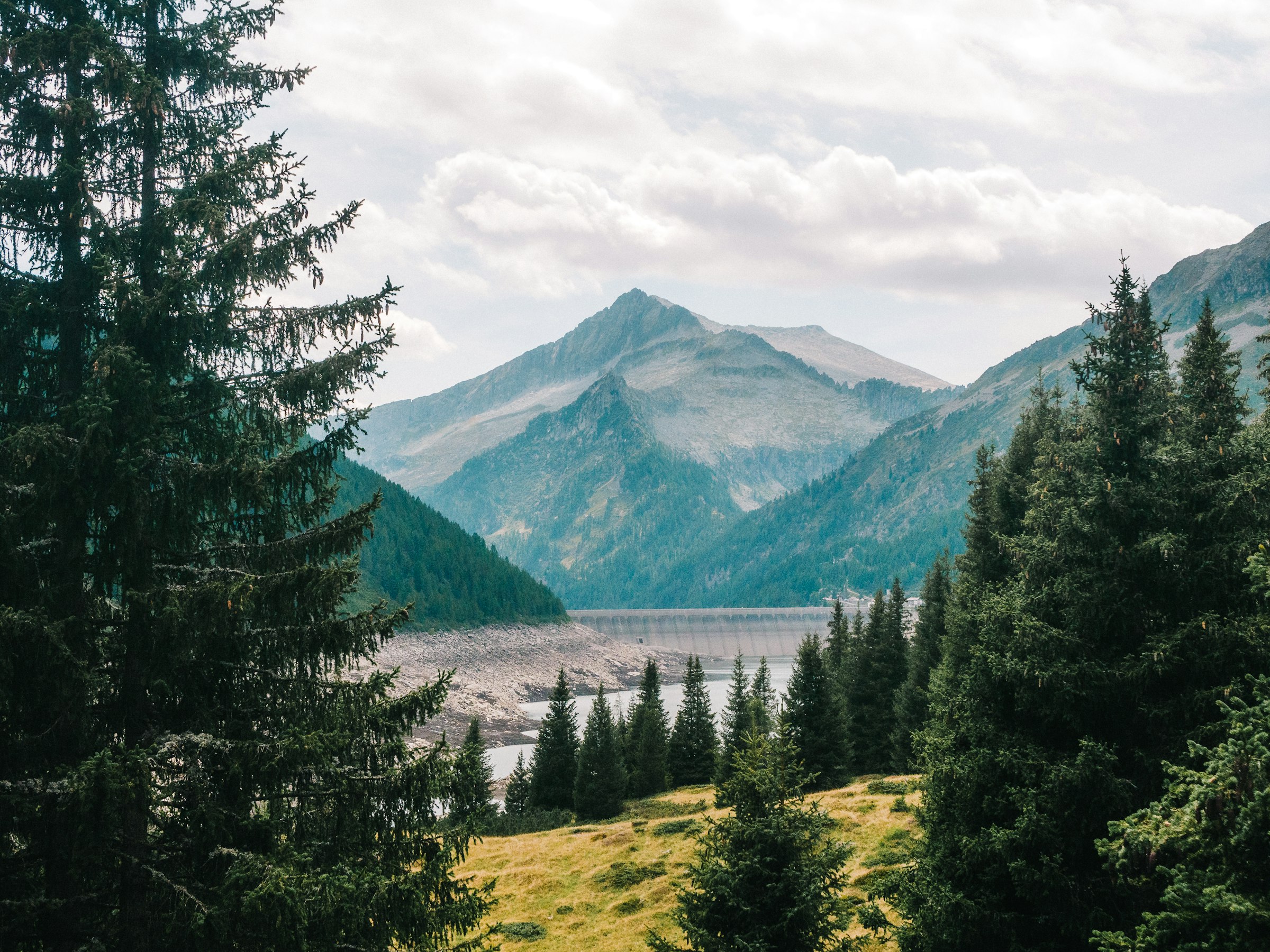
The Yuba River watershed drains forest land, much of it inside Tahoe National Forest, into reservoirs operated by Yuba Water Agency, a public water agency. In a severe fire, the World Resources Institute writes, the burned slopes "could send ash, sediment and debris into rivers and reservoirs," threatening water quality and the infrastructure downstream. In its 2018 write-up, WRI noted that sediment from a fire could clog the agency's reservoir and drive up its operating costs.
Thinning the overgrown vegetation and restoring the forest can reduce that risk. But the work is expensive, it happens on federal land, and the organizations that would benefit from it don't share a budget. WRI's 2026 account puts the water agency's dilemma plainly: before this arrangement existed, there was no straightforward way for the agency to invest directly in restoration work on federal lands.
So the beneficiary had a reason to pay, and the land manager had work it wanted done. What was missing was a mechanism connecting the two.
The calendar problem
The first Forest Resilience Bond, as its developers called it, was built to supply that mechanism. According to WRI, it funded a $4.6 million restoration project covering a 15,000-acre area of the Yuba watershed. The money came from three directions:
- The State of California committed $2.6 million — but as reimbursable grant funding, the kind that pays out after work is completed and verified.
- Yuba Water Agency committed $1.5 million.
- Private investors — WRI names the Rockefeller Foundation, the Gordon and Betty Moore Foundation, Calvert Impact Capital and CSAA Insurance — provided the cash up front. The Rockefeller Foundation later put the amount raised at $4 million.
That's the paradox resolved. The commitments were real, but a reimbursable grant can't pay a crew in the spring for work it will reimburse in the fall. The investors bridged the gap: they paid for the work now, and were repaid as the grants and the water agency's commitments came through. WRI describes the purpose as letting work begin sooner than reimbursement processes often permit.
There was a second, smaller gap. State and federal grants generally don't allow loan interest in their budgets, so someone else had to cover what the investors were owed for waiting. According to Yuba Water, that was its role: the agency's contributions covered the interest accruing to the private investors, which let the partners use the borrowed money to match grant dollars.
What happened
The restoration work was completed in 2023. By WRI's count, it reduced wildfire risk across more than 8,000 acres. In December 2023, the Rockefeller Foundation reported that the bond had "returned all investor capital in line with expectations."
I want to be careful with those acreage figures, because they measure different things. The 15,000 acres was the project area; the 8,000-plus acres is WRI's figure for land where risk was reduced by the time the work finished. The smaller number is the one describing an outcome, so it's the one I'd lean on.
The model then scaled. Yuba Water committed $6 million to a second bond, paid at $600,000 a year over ten years, which the agency says leverages $25 million in total funding for priority work on 16,800 acres in the North Yuba Forest Partnership area.
What the bond didn't do
Borrowing money didn't make the restoration cheaper. The investors had to be repaid, with interest, and somebody — here, the water agency — paid that interest. Financing changes when work can happen. It doesn't change what the work costs, and adds a cost of its own.
The bond also didn't settle the question it exists to address: how much future wildfire damage this restoration will prevent. Nobody can observe the fire that didn't happen. Yuba Water says the arrangement let the project finish years earlier than it otherwise would have, which is the agency's own estimate of a counterfactual, not a measurement. The investors were repaid because the grants and commitments came through, not because a fire was measurably averted. My read is that this was a financing success that has yet to be tested as a risk-reduction success — and the second only gets tested when a fire arrives.
And scale matters. In my view, a few million dollars across several thousand acres is small against the size of the problem in the Sierra. This was a proof that the plumbing works, not a solution to the problem it was built for.
Infrastructure that doesn't look like infrastructure
What stays with me is the shape of the deal. A water agency used part of its own budget to pay for work on land it doesn't own, because the risk to its reservoir starts there. The forest became, for financing purposes, part of the water system.
That idea connects to something I keep coming back to on Field Notes: the risk to an asset often sits somewhere other than the asset. I wrote about a version of it in The Discount You Can't Earn Alone, where a homeowner's fire premium depends partly on work done by neighbors. Here the scale is a watershed instead of a street, but the logic is similar. Protection that sits upstream benefits people who never touch it.
Most of us picture water infrastructure as dams, treatment plants and pipe. In this case, the line item that protected the reservoir was a crew thinning trees miles above it, paid for with borrowed money, and repaid.
Sources
- World Resources Institute, "Investors Think They Can Make Money Reducing Wildfire Risk. A Forest Restoration Project in Yuba, CA Puts this Idea into Practice," Todd Gartner, Adam Connaker and Nathalie Woolworth, November 1, 2018. $4.6 million restoration project across 15,000 acres of the Yuba watershed; $2.6 million reimbursable state grant funding; $1.5 million from Yuba Water Agency; investors named; sediment risk to the reservoir.
- World Resources Institute, "Forest Resilience Bonds Strengthen Communities Before Wildfire Strikes," Todd Gartner and Zach Knight, September 30, 2026. Work completed in 2023, reducing wildfire risk across more than 8,000 acres; ash, sediment and debris risk to rivers and reservoirs; upfront investment lets work begin sooner than reimbursement processes permit; no straightforward way for the agency to invest directly on federal land.
- Yuba Water Agency, "Forest Resilience Bond." Agency contributions cover interest accruing to private investors, since state and federal grants don't allow loan interest; $6 million commitment ($600,000 a year for ten years) to the second bond, leveraging $25 million for work on 16,800 acres; agency estimate of earlier completion.
- The Rockefeller Foundation, "The Rockefeller Foundation Zero Gap Fund Investee Blue Forest Successfully Completes Its Forest Resilience Bond Pilot," December 4, 2023. Yuba I raised $4 million and returned all investor capital in line with expectations.
Figures current as of October 2026.