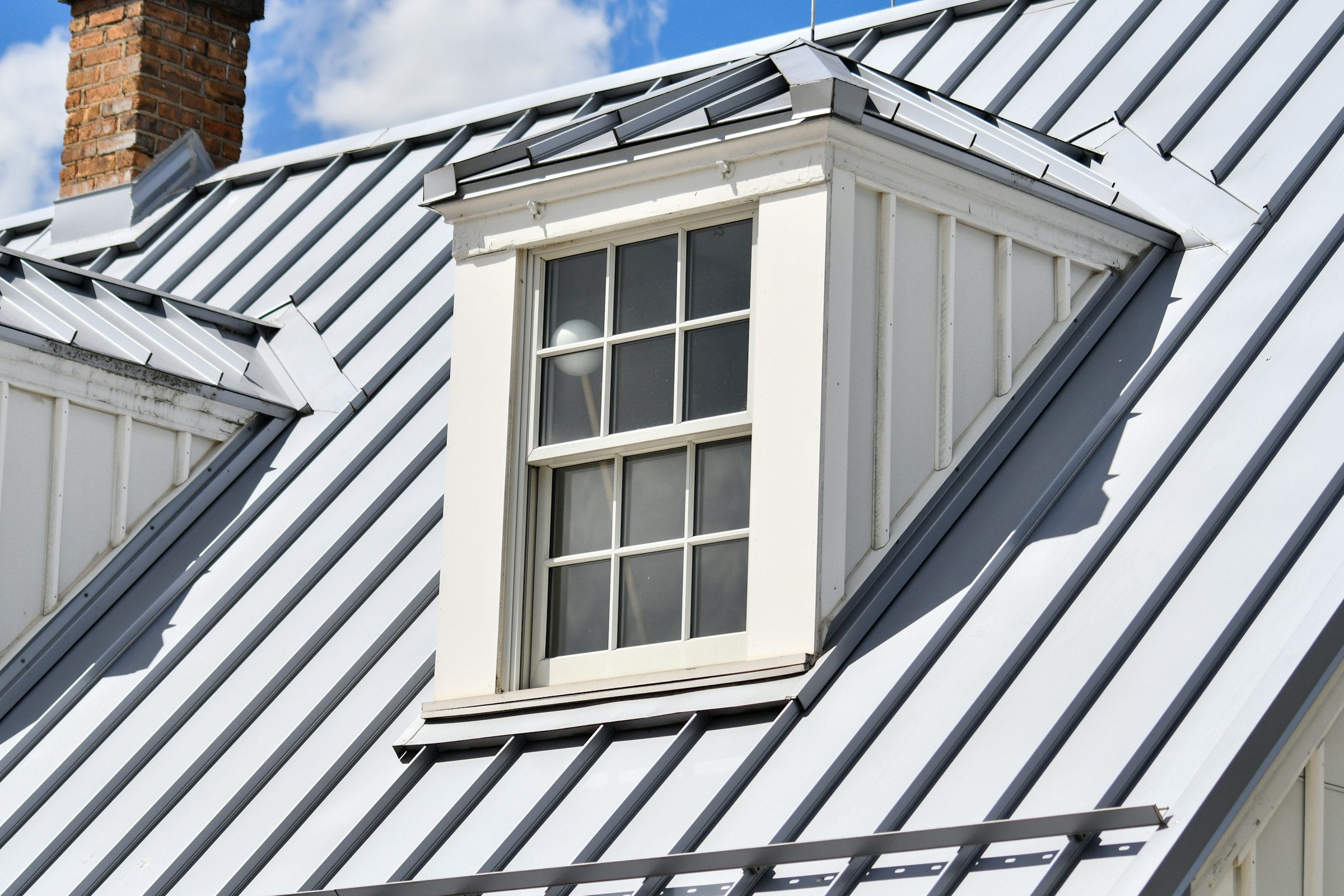
A stronger roof costs more to put on. The question worth asking is what it buys, and for a long time the honest answer was a forecast. Laboratory tests and catastrophe models said roofs built to a tougher wind standard should hold up better. Many insurers, by the regulator's own account, stayed skeptical. Nobody had seen enough of those roofs go through a real hurricane.
Then, in September 2020, Hurricane Sally came ashore at Gulf Shores, Alabama, as a strong Category 2 storm. It was the first hurricane to cross what the researchers who studied it later called a critical mass of FORTIFIED homes.
What the standard is, and who checks it
FORTIFIED is a construction program run by the Insurance Institute for Business & Home Safety, the research organization funded by property insurers. Its entry level, FORTIFIED Roof, is about keeping the roof deck attached and the water out: ring-shank nails in a tighter pattern, sealed seams on the deck, reinforced roof edges, and attic vents tested against wind-driven rain. The higher levels, Silver and Gold, add protected windows and doors and a continuous connection from roof to foundation.
The detail that may matter most is that the designation isn't self-reported. A trained FORTIFIED evaluator inspects the work, and IBHS verifies what the evaluator submits.
By the report's count, Alabama leads the country in FORTIFIED designations. Its insurance department runs the Strengthen Alabama Homes grant program, which by the department's count has put about $86 million toward roughly 8,700 FORTIFIED re-roofs. By 2025 the state had more than 53,000 designated homes, most of them in Mobile and Baldwin, the two coastal counties Sally hit.
What the claims showed
In 2024 the Alabama Department of Insurance required insurers to turn over policy and claims data from the storm zone. The department and the University of Alabama's Center for Risk and Insurance Research published the analysis in May 2025. After cleaning, the sample held 40,195 wind-covered policies on owner-occupied single-family homes south of Interstate 10.
The researchers compared the homes three different ways, and the size of the answer depends on which one you read. Their preferred version, which they describe as the best "all-else-equal" estimate, matched each FORTIFIED home with the nearest conventional home within a quarter mile, so the two had faced nearly the same wind and rain. It also set aside claims caused by falling trees. On that basis, homes with a FORTIFIED Roof designation filed 73 percent fewer claims than their conventional neighbors.
The other two methods gave smaller but still large numbers. Across all three, the report puts the drop in claim frequency at 55 to 74 percent, depending on the designation and the method. When a FORTIFIED home did file a claim, the claim was smaller relative to the home's value, by 14 to 40 percent.
A claim is more than a repair bill
I find the claim count more telling than the dollar figures, because a claim is something that happens to a household, not just an entry on an insurer's books. It comes with a deductible. Then there's whatever the policy doesn't cover, the wait for an adjuster, the search for a contractor, and often months of living around the damage.
The report puts a number on one piece of that. Policyholders in the sample paid $53.6 million in deductibles after Sally. The researchers estimate that if every conventional home had carried a FORTIFIED Roof, owners would have paid about $32.6 million less, a 61 percent reduction. That figure is a modeled scenario, built by applying average performance across the whole sample, not something anyone measured. Still, it points at a cost that rarely comes up when people price a roof.
There's also a benefit before any storm arrives. Alabama requires admitted insurers to discount the wind portion of the premium for designated homes. The benchmark schedule reproduced in the report runs from 20 percent for a FORTIFIED Roof designation more than five years old to 35 percent for a newer one, with larger discounts for Silver and Gold. The discount applies to part of the bill, not all of it.
The finding about inspection
The result that surprised me most sits in the back half of the report. Several towns in the study area had adopted building codes closely modeled on FORTIFIED, enforced by local code inspectors rather than FORTIFIED evaluators. Those homes generally did better than conventional construction. But homes with a FORTIFIED Roof designation did substantially better again, at least 50 percent better than the similar-code roofs by the report's measure. The authors put the difference down, most likely, to what they call the private enforcement element. A FORTIFIED home is inspected by a FORTIFIED evaluator, and IBHS verifies what the evaluator records; a code-built home relies on the local inspection process.
The gap wasn't universal. At the Gold level, the code-built homes performed about as well as the designated ones.
My read is that on the roof, at least, whether someone confirmed the work was done mattered about as much as what the standard said.
What the roof didn't do
Several limits keep this in proportion.
Falling trees caused 46 percent of all claims in the sample, and the roof standard isn't designed to stop a pine coming through the ceiling. The 73 percent figure excludes tree claims on purpose, because the authors wanted to judge the roof against what it was built to do. An owner, of course, lives with the tree claims too.
Sally made landfall with maximum sustained winds of 105 mph. The results describe that storm in that place. The authors note that at those wind speeds most damage comes from roofs and cladding, which helps explain why Roof and Gold homes performed similarly in the matched comparison. A stronger storm would test other parts of a house.
Not every insurer reported roof age, so some homes counted as conventional may in fact have been re-roofed to a similar standard. The authors note that this would make FORTIFIED look less effective, not more.
And the organizations closest to the program were close to the study. It was produced by the department that runs the grant program, with technical support from IBHS. It was peer-reviewed, and its data came from 86 insurers through a mandatory data call, but readers should know who was involved.
Finally, none of this tells you whether a stronger roof pays for itself on any particular house. That depends on the cost of the work, the discount, and the storm that does or doesn't come.
The same idea, a different hazard
IBHS runs a parallel program for wildfire, Wildfire Prepared Home, built around embers, the roof, and what sits closest to the walls, and it also relies on inspection rather than self-report. I wrote about how California now credits that kind of work in What You Can Still Do to Lower Fire Premiums. Wildfire has nothing yet like Sally's claims record.
Pricing an improvement by what it prevents
We usually judge home improvements by what they add at resale. A stronger roof doesn't fit that frame easily. Its main return is a claim that never gets filed: a deductible never paid, a contractor never chased, a season never spent under a tarp. The report also cites an earlier study, by some of the same researchers, which found that buyers paid about 7 percent more for FORTIFIED homes than for otherwise identical ones, so resale may not be entirely beside the point.
But the clearest evidence from Sally isn't about price. It's about the claims that, on those roofs, never got filed.
Sources
- Alabama Department of Insurance and Center for Risk and Insurance Research, University of Alabama, "Performance of IBHS FORTIFIED Home Construction in Hurricane Sally," May 5, 2025. 40,195-policy sample from a mandatory data call (Bulletin 2024-3), Mobile and Baldwin counties south of I-10; nearest-neighbor comparison within 0.25 miles excluding tree-fall claims (FORTIFIED Roof claim frequency −73%); range across methods of 55–74% (frequency) and 14–40% (severity); 46% of claims from falling trees; $53.6 million in deductibles and the modeled $32.6 million (61%) saving; benchmark wind-premium discounts from ALDOI Bulletin 2016-7; FORTIFIED Roof at least 50% better than similar-code roofs; Sally landfall at 105 mph; Strengthen Alabama Homes grant totals and 53,000+ designations; citation of Awondo et al. (2023) on a ~7% sale-price premium.
- Insurance Institute for Business & Home Safety, FORTIFIED Roof. Roof standard requirements: ring-shank nails in an enhanced pattern, sealed roof deck, enhanced edge details, wind- and rain-resistant attic vents. See also the FORTIFIED Roof Evaluator Checklist.
- Insurance Institute for Business & Home Safety, Wildfire Prepared Home Technical Standard. 2025 technical standard update, effective June 1, 2026; ember-focused Essential level and Enhanced level.
Figures current as of October 2026.