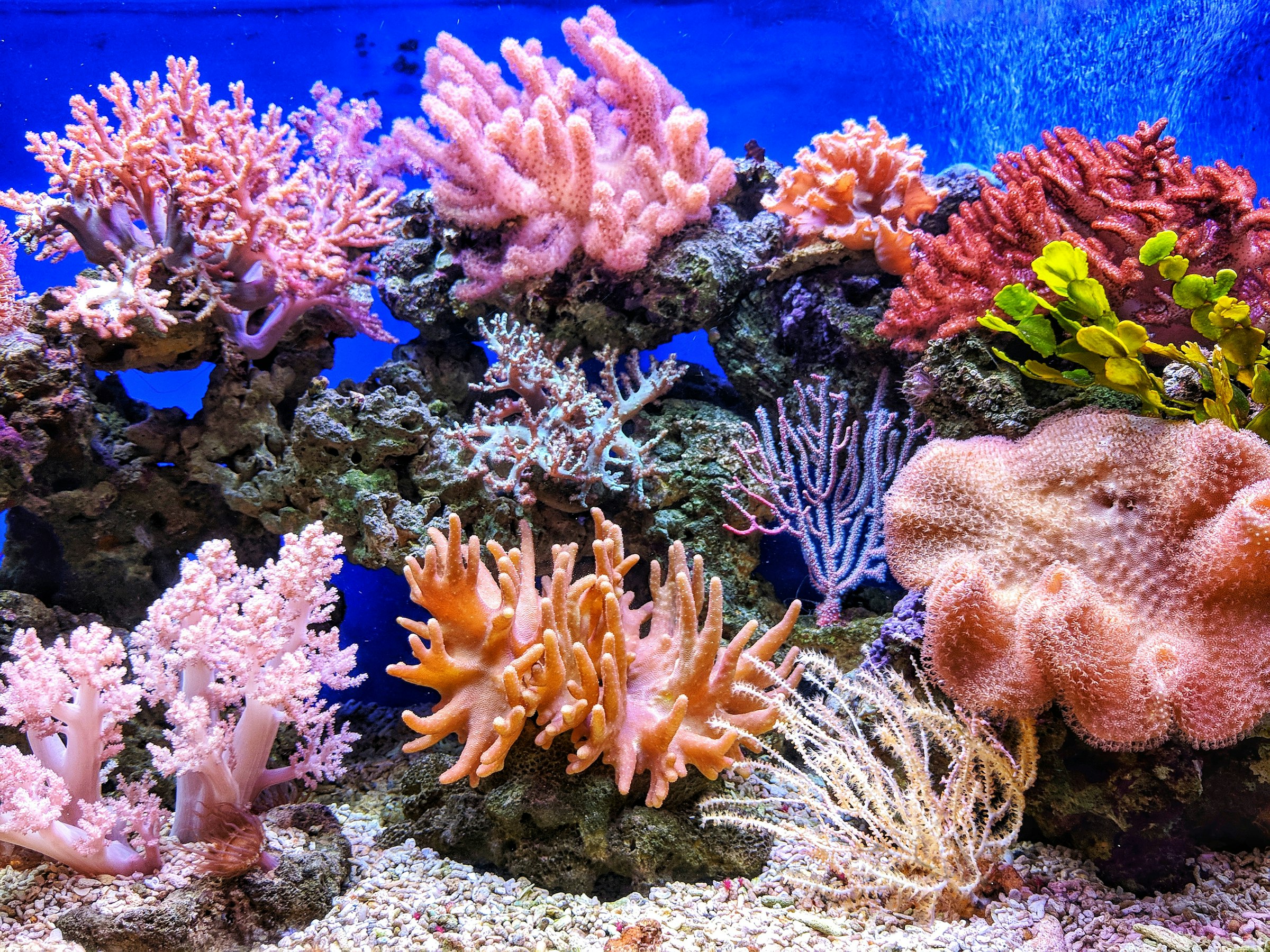
The coral reefs off America's coasts behave like seawalls no one built and no one sends a bill for. Federal scientists have put a number on what they do, and it is large.
The question I find interesting is what happens when one of those seawalls gets damaged. A breakwater has an owner and a repair budget. A reef, until recently, rarely had either in any usable form.
What a reef is worth to the shore
In 2019, a team led by the US Geological Survey estimated the flood protection that US coral reefs provide. Reefs break waves before they reach the shore, and the study modeled what storm flooding would look like with and without them, at fine resolution, along more than 3,100 kilometers of reef-lined coast in Hawaii, Florida, Puerto Rico, the US Virgin Islands, Guam, American Samoa and the Northern Mariana Islands.
The study's estimate: each year, on average, the reefs avoid flooding for more than 18,000 people and avoid more than $1.8 billion in losses, in 2010 dollars. That total combines direct damage to buildings (about $825 million), lost economic activity, and business interruption. The largest state values are in Hawaii, about $836 million a year, and Florida, about $675 million, with Puerto Rico at about $183 million.
Two notes on what those numbers are. They're modeled, combining storm, wave and flood simulations with census and economic data, not a tally of losses someone observed. And they're annual averages; in a single large storm, USGS estimates, the protection off a stretch of coast like Miami–Fort Lauderdale runs far higher.
Why a reef was hard to insure
Ordinary property insurance pays the owner of insured property after a loss is documented and assessed. A reef doesn't fit that model. No private owner holds a deed to it, the damage is underwater, and a claims adjuster can't easily put a replacement cost on a broken coral colony.
That left some of the most valuable coastal protection in these places with, in practice, no money set aside for repairs after a storm. Damage was something to be absorbed, or funded slowly from whatever public budgets could spare.
Paying on the wind instead of the loss
The workaround is parametric insurance. Instead of paying for a documented loss, it pays a set amount when a measured trigger is hit — here, wind speed within a defined area around the reef. There's no claim to adjust and no damage to appraise before the money moves.
Speed matters because of what happens to a reef after a storm. Hurricanes break and uproot coral; the pieces can be stabilized and reattached if crews get to them in time. The Nature Conservancy's guidance for reef managers says that carrying out those repairs within 90 days of a storm greatly increases the chance the coral recovers.
Mexico first, then Hawaii
Mexico went first. In 2019, a coastal-management trust set up by the state of Quintana Roo began buying a parametric policy covering its reefs, with Swiss Re as reinsurer. According to The Nature Conservancy, the 2020 policy cost $250,000 and paid out in tiers: $850,000 at 100-knot winds, rising to a maximum of about $2.1 million at 160 knots or more.
On October 7, 2020, Hurricane Delta crossed the covered area with winds of 100 knots. That triggered the $850,000 payout — which TNC describes as the first insurance payment ever made to repair and restore a coral reef. Over the following three months, trained reef brigades stabilized 2,152 uprooted coral colonies and reattached 13,570 fragments.
The United States followed in 2022. The Nature Conservancy bought what it calls the first coral reef insurance policy in the country, covering reefs around the main Hawaiian Islands and written by Munich Re. Under the policy's current terms, it pays when tropical-storm winds of 50 knots — about 57 miles an hour — pass through the core zone, up to $1 million per storm and $2 million a year, with the money going to damage assessment and rapid repair.
Until this year, it hadn't paid out. Then, in mid-August 2026, Hurricane Lala reached the Big Island as a Category 1 storm. The policy's minimum payment, $200,000, was released within days — by Insurance Business's account, the first time a US policy written to protect a coral reef has paid out.
How far this goes
These policies are small. Hawaii's covers up to $2 million a year against reefs that USGS estimates avoid about $836 million in losses a year. Mexico's first payout was under a million dollars. For now they are a proof of concept, not a match for the scale of the risk.
They also cover only one threat. A wind trigger pays on wind. Coral bleaching from a marine heat wave doesn't trip it. And a trigger is a proxy: a storm can damage a reef without crossing the threshold, or cross the threshold while doing little harm. That's the tradeoff parametric insurance makes for its speed.
Still, the shift in my view is real. On a balance sheet, a reef can now be treated as roughly what it has always been: infrastructure that guards a shoreline much as a seawall would, complete with a premium and a payout schedule. If the approach spreads, it's not hard to imagine mangroves, dunes and marshes funded the same way. Whether it does will depend on who is willing to pay the premiums, and so far that has mostly been a conservation group and a state trust that draws on public and private money.
A homeowner along these shores may depend most on a flood defense that isn't theirs and never appears on any bill they pay. What's different now is that, for a few reefs, some money is now waiting for the day after the storm.
Sources
- Storlazzi, Reguero, Cole, Lowe, Shope, Gibbs, Nickel, McCall, van Dongeren and Beck, "Rigorously Valuing the Role of U.S. Coral Reefs in Coastal Hazard Risk Reduction," US Geological Survey Open-File Report 2019-1027, April 30, 2019. Modeled annual expected benefits: flooding avoided for more than 18,180 people; $1.805 billion (2010 dollars) in avoided direct damage (over $825 million), economic activity and business interruption losses; more than 3,100 km of reef-lined shoreline.
- US Geological Survey, "Coral reef barriers provide flood protection to more than 18,000 people and $1.8 billion," national news release, April 30, 2019. Annual values of $836 million in Hawaii, $675 million in Florida, $183 million in Puerto Rico; 50-year storm value off Miami–Fort Lauderdale.
- The Nature Conservancy, "A Post-Storm Response and Reef Insurance Primer," 2021. Trust purchasing the Quintana Roo policy from 2019; 2020 policy cost $250,000 and payout tiers; Hurricane Delta, October 7, 2020, triggered a $850,000 payout, the first insurance payment to repair a coral reef; 2,152 colonies stabilized and 13,570 fragments reattached; repairs within 90 days improve recovery.
- The Nature Conservancy, press release on the renewal of Hawai'i's coral reef insurance policy, April 15, 2025. First US reef policy, purchased 2022; Munich Re; Main Hawaiian Islands; triggered by 50-knot tropical storm winds in the core zone; $2 million annual maximum, $1 million per storm.
- Insurance Business, "Parametric insurance just paid out for a coral reef for the first time in the US," August 21, 2026. Hurricane Lala, mid-August 2026; $200,000 minimum payment released within days.
Figures current as of October 2026.