A homeowner in California who lives miles from any wildfire is helping to pay for the homes that burned in Los Angeles in January 2025. Here is how that happens.
The insurer of last resort
When no private insurer will cover a house, usually because it sits in a high-fire area, the owner can still get insurance through the FAIR Plan. It is California's insurer of last resort, and every insurance company that sells property insurance in the state is required to help fund it, in proportion to its share of the market.
After the January 2025 fires, the FAIR Plan expected about $4 billion in claims. Even after its reserves and its reinsurance, it did not have enough money to pay them.
So in February 2025, for the first time in more than 30 years, it charged the insurance companies that fund it a one-time bill of $1 billion.
The pass-through
The insurers did not simply absorb that cost. The state let them pass about half of it, up to $500 million, on to their own customers as a temporary surcharge — and regulators went on to approve roughly $420 million of it, across 105 insurers.
Those surcharges began landing on ordinary policies in late 2025. They are not a flat fee but a small percentage added to each premium, typically one to two percent, collected in installments over as long as two years. For a typical homeowner, the fee came to a median of about $28, by the state's own figure.
A family whose home is nowhere near a fire, who never bought a FAIR Plan policy, is now helping pay for homes that could not be insured any other way. When a cost gets spread across everyone, the risk has been socialized. A consumer group sued to stop the pass-through; in June 2026 a Los Angeles judge upheld it. This is not a one-off workaround. It is how the system now works.
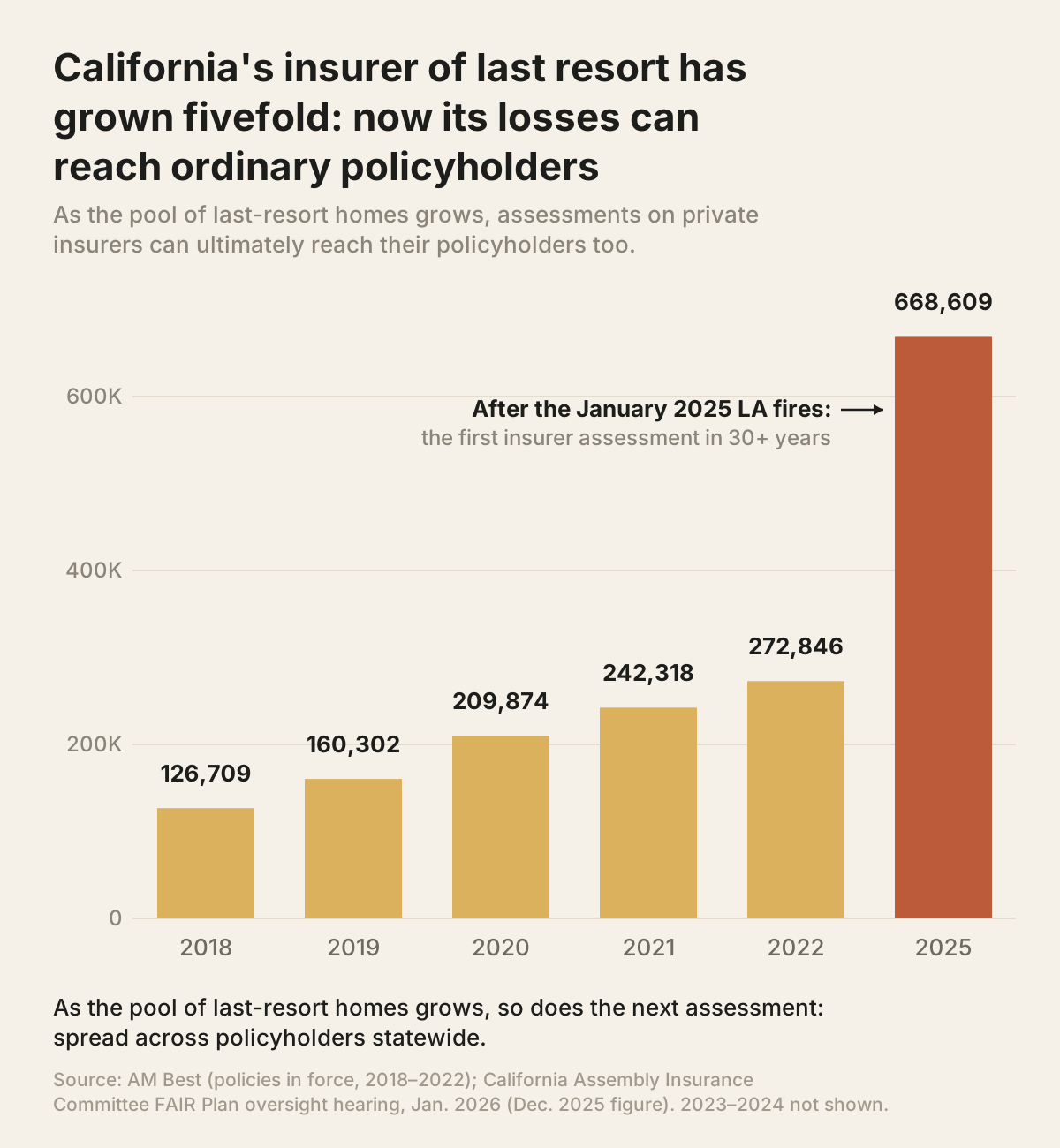
The pool is growing
When insurers walk away from the most dangerous homes, that risk does not disappear. Those homes fall into the FAIR Plan. And when the FAIR Plan runs short, the bill comes back to policyholders across the state, including the ones who did everything they could to stay out of harm's way.
And it is not only this one bill. As more homes lose private coverage and fall into the FAIR Plan, the pool it has to cover grows, and so does the size of the next assessment.
What it means for a safe address
For anyone weighing what a California home costs to own or to buy, that is a new line that can sit on any policy in the state, no matter how safe the address.
So it changes what you are really buying when you buy a low-risk policy. It is no longer only the price of protecting your own home. Part of it is a standing payment toward everyone else's.
Sources
- California Department of Insurance, "Commissioner Lara approves FAIR Plan's request for $1 billion assessment to pay wildfire claims," February 11, 2025. $1 billion assessment approved; insurers responsible for half; temporary supplemental fee as a percentage of premium, subject to prior approval.
- Insurance Journal, "California FAIR Plan Gets Approval for $1 Billion Assessment," February 11, 2025. First assessment on insurers in more than 30 years; over $914 million already paid on Palisades and Eaton claims at the time of approval.
- Los Angeles Times, "FAIR Plan to assess insurers $1 billion for L.A. fires; consumers may be on the hook for nearly half," February 11, 2025. Approximately $4 billion in expected losses from the Palisades, Eaton, and Hurst fires.
- California Department of Insurance, "FAQ: Recoupment of FAIR Plan Assessment by Admitted Insurers," February 27, 2025. Recoupment of up to 50% with Commissioner approval; collection within two years.
- Los Angeles Times via Guam Daily Post, "Home insurer surcharges for wildfires is legal, judge rules," July 2026. Roughly $420 million in surcharges approved across 105 insurers; median homeowner fee of $28 per the Department of Insurance; Los Angeles County Superior Court upheld the recoupment framework on June 30, 2026, denying Consumer Watchdog's challenge.
- Bay Area News Group, "California insurers to charge homeowners for FAIR Plan bailout after LA wildfires," November 13, 2025. Surcharges of roughly 1–2% of premium beginning December 2025 through March 2026 across major carriers.
- California Assembly Insurance Committee, FAIR Plan Oversight Hearing background paper, January 28, 2026. 668,609 policies in force as of December 2025, up 146% since September 2022; prior assessments 1993–1995 totaling roughly $260 million; assessment formula based on market share; recoupment structure under the 2024 agreement.
Figures current as of September 2026.