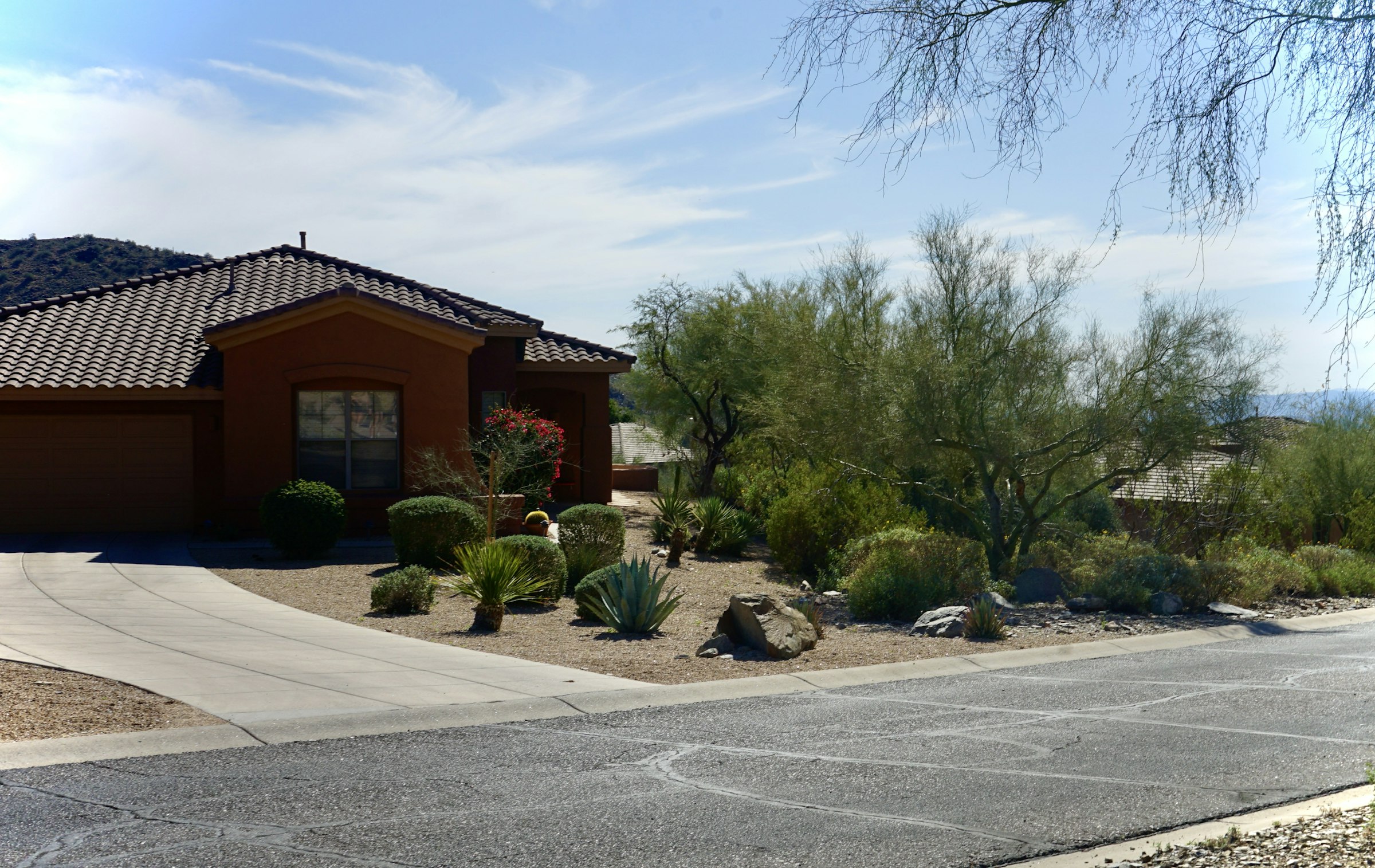
Can tearing out your lawn make your house worth more, even when the price of the rebate is a permanent limit on what any future owner can do with the yard?
In Henderson, Nevada, the city pays homeowners to swap grass for desert landscaping. In 2024 the city's share of the program supported 347 projects that removed more than 314,000 square feet of turf, and the city expects those conversions to save more than 17 million gallons of water a year. That's by the city's own count, in a March 2025 announcement.
The money isn't what caught my attention. The contract that comes with it is.
How the deal works
Henderson's payment sits on top of a larger regional program. The Southern Nevada Water Authority runs Water Smart Landscapes, which currently pays single-family homeowners $5 per square foot for the first 10,000 square feet converted in a year and $2.50 per square foot beyond that. In 2025 Henderson advertised an extra $575 for its own residents. Rates have changed many times over the program's life, so any figure here is a snapshot.
Before any money is paid, the homeowner grants the water authority a conservation easement over the converted area. In the authority's own words, the easement "applies in perpetuity" and "runs with the land." It is recorded with the Clark County Recorder. Whoever buys the house later is bound by it too.
The terms are narrower than "you can never touch the yard." Owners can replace plants, change the mulch, or redesign the space. What they can't add back in the converted area is irrigated grass, spray irrigation, a swimming pool, a pond, or any other water feature. If the conversion isn't maintained, the owner owes back the full incentive plus administrative fees, and the authority can inspect and take legal action.
So a buyer who imagines a pool in that particular stretch of backyard is out of luck. That's a real restriction, and I expected it to show up in the price.
What happened to home values
An economist has looked at this question. Jonathan Baker studied the authority's program in a 2021 paper in the Journal of the Association of Environmental and Resource Economists. He estimated that a typical conversion cut a home's water use by 19 to 21 percent, may have raised its energy use by about 3 percent, and raised its value by about 1 percent. He found little evidence that neighboring homes' values moved.
His explanation is about money, not taste. The study ties the value gain to the private benefits of the new yard: lower water bills and less lawn care, partly offset by somewhat higher energy use. Put another way, buyers seem to pay for a yard that's cheaper to run.
Two caveats matter here, and the first is a scope point I didn't catch in my LinkedIn version. Baker's home-value estimates come from the Las Vegas Valley Water District's service area, which covers the city of Las Vegas and unincorporated Clark County. Henderson runs its own water utility. Its residents use the same regional rebate and sign the same easement, but the 1 percent figure wasn't measured on Henderson homes.
Second, the study doesn't separate the easement from the landscaping. Every house that took the rebate also took on the restriction, so there's no way to tell whether buyers liked the easement, ignored it, or discounted it a little while valuing the savings more. What the result does show is that, on average, the package was associated with higher values, not lower.
Why the water authority wants it in writing
The easement makes more sense once you see the problem from the authority's side.
Southern Nevada gets about 90 percent of its water from the Colorado River, according to the authority. Water used indoors is mostly treated and sent back to Lake Mead, and Nevada earns "return-flow credits" for it, which means that water doesn't fully count against the state's share of the river. Outdoor water is different. In the authority's words, water used outdoors "evaporates and cannot be used again." A gallon taken off a lawn is a gallon the region gets to keep.
The open question is what each saved gallon costs. Christa Brelsford and Joshua Abbott answered it in a 2021 paper in the Journal of Environmental Economics and Management, using sixteen years of monthly water records from Las Vegas homes. Their answer depends on one assumption: how long the savings last. If a converted yard keeps saving water for 20 years, the program cost the authority about $1.88 per thousand gallons saved. At 10 years the figure rises to about $3.37. For comparison, they put the average retail price of water during their study period at about $2.23 per thousand gallons. Their figures leave out the program's administrative costs.
Baker's paper, which does count administrative costs, puts the authority's cost between about $2.65 and $3.31 per thousand gallons. So whether the program costs less than water sells for depends on the horizon you assume and the costs you count. On these numbers, it's not a clear win.
The easement is the horizon
This is my read, not a finding from either paper. The easement is how the authority makes the long horizon real.
Both cost estimates get better the longer the savings last. A rebate with no strings would buy savings only until the first owner, or the next one, decided they wanted a lawn again. A permanent easement turns a homeowner's landscaping choice into something closer to infrastructure: a reduction in water use that stays attached to the parcel after the original owner sells, without the authority having to pay for it again.
The homeowner gets help paying for a yard that costs less to run. The water authority gets a cut in outdoor use that doesn't leave when the owner does. The buyer inherits both the restriction and the lower bills. In the study that measured it, the market seems to net those out in favor of the bills.
There's a broader pattern here that I wrote about in The House Was Never the Scarce Part: in the desert, more and more of what a property is worth comes down to the water arrangements attached to it. Phoenix ties new subdivisions to a century of proven supply. Southern Nevada ties individual yards to a permanent promise not to irrigate them.
What surprised me
I'd have bet on a discount. A permanent limit on your own land, binding on people who never agreed to it, sounds like the kind of thing buyers walk away from or price in.
The evidence doesn't say buyers love the restriction. It says they're willing to take it along with a yard that's cheaper to run, and on average the cheaper yard comes out ahead. The grass is gone for good, and that permanence is what the water authority paid for.
Sources
- City of Henderson, news release on the 2024 landscape rebate program, March 2025. Henderson's portion of the program supported 347 projects in 2024, removing more than 314,000 sq ft of turf, with expected savings of more than 17 million gallons a year; see also FOX5 Las Vegas, "'More cash, less grass,'" March 13, 2025 ($575 supplemental rebate).
- Southern Nevada Water Authority, Water Smart Landscapes Rebate. Current rebate rates; conservation easement "applies in perpetuity," "runs with the land," recorded with the Clark County Recorder; prohibits irrigated grass, spray irrigation, pools, ponds and water features in the converted area; reimbursement if not maintained. See also the authority's sample restrictive covenant.
- Jonathan E. Baker, "Subsidies for Succulents: Evaluating the Las Vegas Cash-for-Grass Rebate Program," Journal of the Association of Environmental and Resource Economists 8(3): 475–508, 2021. Water use down 19–21%; energy use up about 3%; property values up about 1%; little evidence of spillovers to neighbors; cost to the water authority about $2.65–$3.31 per thousand gallons.
- Christa Brelsford and Joshua K. Abbott, "How Smart Are 'Water Smart Landscapes'?" Journal of Environmental Economics and Management 106, 2021 (author manuscript). Las Vegas Valley Water District homes, 2000–2015; cost about $1.88 per thousand gallons saved assuming 20 years of savings ($3.37 at 10 years), against an average retail price of about $2.23; excludes administrative costs.
- Southern Nevada Water Authority, "Where Water Comes From." About 90% of supply from the Colorado River; return-flow credits for treated water returned to Lake Mead; outdoor water "evaporates and cannot be used again."
Figures current as of October 2026.