On August 6, 2025, Tucson's city council voted unanimously to reject Project Blue, a data center campus planned for 290 acres on the city's southeast side. News coverage widely tied it to Amazon. Amazon Web Services said it had no commitments to the project. The council's objections weren't about the land. They were about transparency, and above all about water and power.
What happened next is the part I find most telling. The project didn't go away. The developer, Beale Infrastructure, already had a deal to buy the land from Pima County, which approved the sale in June 2025. It came back with a revised plan that would cool the buildings with electricity "rather than water," as KJZZ reported in September 2025, under a planned agreement with the local electric utility. By April 2026, site work had started on the same 290 acres, now outside city control.
The land was never the problem.
What a data center actually needs
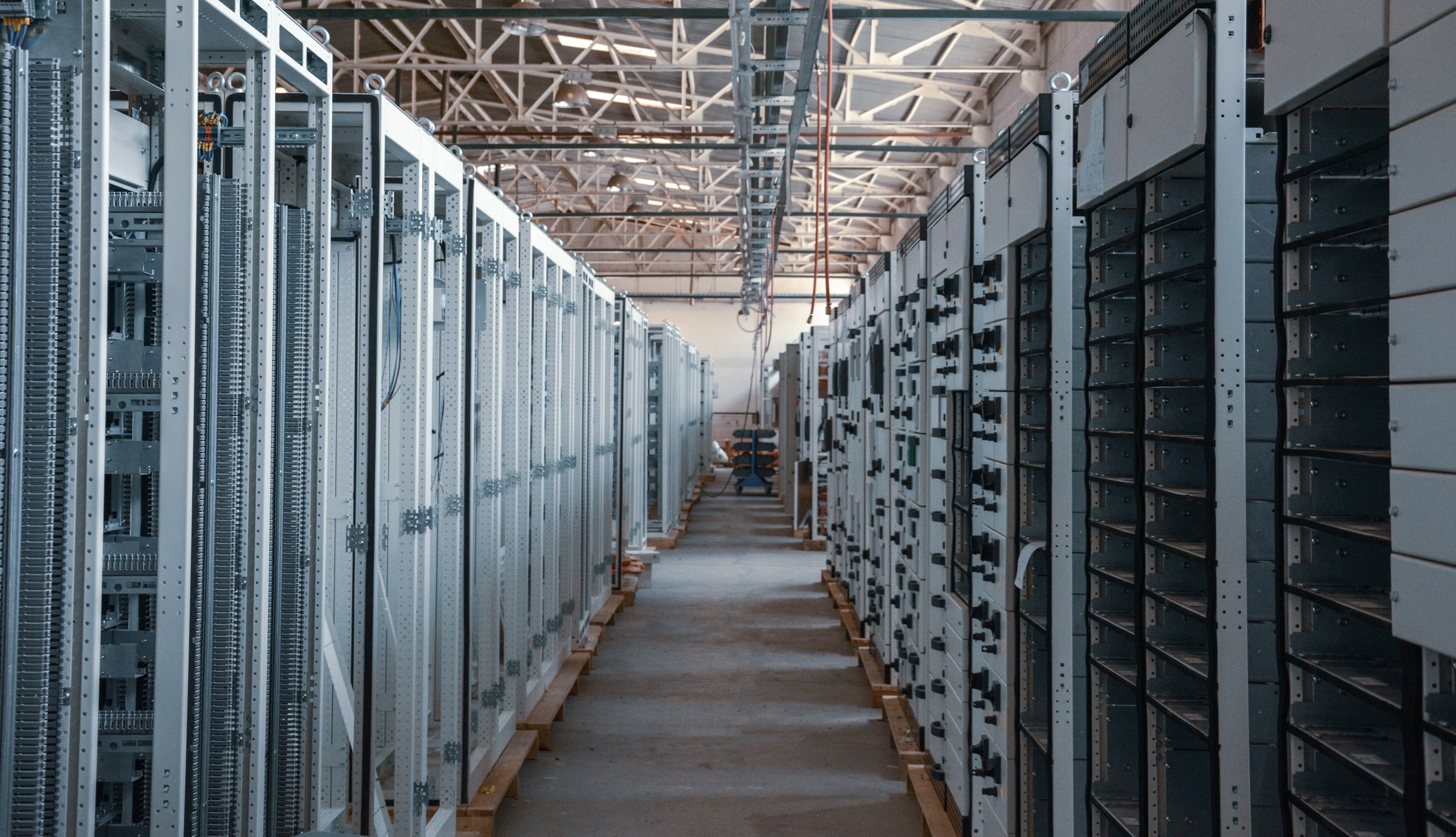
For most of the last century, industrial land was priced mostly by location and size: how close it was to highways, rail, and workers, and how many acres it had. A data center flips that order. It needs flat ground, but plenty of places have flat ground. What's harder to find is a large, reliable supply of electricity to run thousands of servers, and usually water to keep them from overheating.
The water can be considerable. In 2021, Google's data centers in The Dalles, Oregon, used 274.5 million gallons, more than a quarter of the city's total water use. Those figures came out only after a 13-month legal fight between the city and The Oregonian, which had requested them under Oregon's public-records law.
Project Blue shows that water and power can be traded against each other. Its original plan, laid out in a July 2025 city fact sheet, would have used potable water only temporarily and then switched to reclaimed water for cooling, with the developer paying for a $100 million extension of Tucson's reclaimed-water system. The revised county plan drops water cooling and uses electricity instead. Either way, the site has to have one or the other locked in, and the electricity part is getting harder to find.
The wire takes longer than the building
In Virginia, which has more data centers than any other state by Pew Research Center's count, the utility Dominion Energy reported about 21 gigawatts of data-center capacity in various stages of contracting in July 2024. By its first-quarter 2026 earnings call it said it had "over 50 gigawatts." One thing to keep in mind: most of that is still early in the pipeline. Only about 10.4 gigawatts was under signed electrical service agreements. The rest is demand that has been requested, not demand that's been connected.
Even so, the timelines don't line up. CBRE Investment Management, citing the International Energy Agency, puts the time to plan and commission a hyperscale data center campus at roughly one to three years. The transmission lines, substations, and transformers needed to feed it take about five to fifteen. Those are indicative ranges, but the gap is the point. A company can put up a building much faster than the grid can bring power to it.
When capacity runs short, the bill spreads
PJM runs the grid for much of the mid-Atlantic and parts of the Midwest. It holds a yearly auction to pay power plants to be available on the highest-demand days. Think of it as paying for spare capacity in advance. That cost is charged to the utilities and power suppliers that serve customers, and as PJM notes, wholesale costs like this make up part of retail electric bills.
For delivery in 2024–25, the auction cleared at $28.92 per megawatt-day. The next year it cleared at $269.92. Every auction since has hit the cap the federal regulator approved: $329.17 for 2026–27, $333.44 for 2027–28, and $325 for 2028–29, the most recent, held in July 2026. That's more than ten times the 2024–25 price. And in each of the last two auctions, PJM reported it couldn't secure enough capacity to meet its own reliability standard.
PJM's independent market monitor, Monitoring Analytics, has pointed to a cause. In a January 2026 report it said "data center load growth is the primary reason for recent and expected capacity market conditions." It estimated that data-center load accounted for $6.5 billion, or 40 percent, of the $16.4 billion cost of the December 2025 auction. It also found that across three auctions, $21.3 billion of $47.2 billion was tied to forecast data-center demand.
Three caveats matter. First, PJM notes that not every customer pays the auction price. Utilities that own their own generation, and suppliers with long-term contracts, are partly shielded. Second, prices hit a cap. The monitor estimated the December 2025 auction would have cost $9.9 billion more without it. Third, the monitor itself questioned how meaningful it is to run an auction on forecasts this uncertain. And PJM isn't Tucson's grid. I'm using it because it's where the cost of scarce capacity has been measured most clearly, not because Arizona's numbers look the same.
Powered land
CBRE Investment Management has a name for the sites that come out ahead: "powered land." Its June 2026 article describes such sites as valued for "premiums driven by pre-secured interconnection agreements." In plain terms, the premium attaches to a secured connection to the grid, not to the acreage.
My read is that this changes where value sits on a parcel. It moves away from the dirt and toward whatever comes attached to it: an interconnection agreement, a water allocation, a substation nearby. I made a similar point about Phoenix in The House Was Never the Scarce Part, where homes are only as valuable as the proven water behind them. Data centers take that logic and apply it to industrial land.
Here's the catch, and it's the part I keep coming back to. The premium for powered land goes to whoever owns the site. When grid capacity gets scarce, at least in the market where it's been measured, the higher cost of that scarcity is spread across customers buying power on the same grid. That includes households that don't live anywhere near a data center.
The fight in Tucson
That was the concern in Tucson. Council member Paul Cunningham said there was no way to guarantee that the cost of extra power supply for the data center "wasn't going to be passed on to our ratepayers." Earlier that year, Tucson Electric Power had asked to raise rates 14 percent. AZ Luminaria, which reported both, didn't link the rate request to the data center.
The project's backers had answers. The city's fact sheet said Project Blue would pay for all grid upgrades built for its benefit, that its rates would cover its full cost of service, and that it would spread the utility's fixed costs over more electricity sold. A study commissioned by the Chamber of Southern Arizona together with Pima County and the City projected $250 million in tax revenue over ten years for the first phase, including $97 million for the city. For the revised county plan, Beale projected about $152 million over ten years.
Those commitments may hold. And not every town says no. Pima County said yes to the same project.
My read: the scarce input was never the land. It's the water underneath and the connection to the grid. Tucson voted down the project. Then the same 290 acres moved under county rules, the cooling switched from water to electricity, and construction started anyway.
Sources
- AZ Luminaria, "Tucson City Council rejects Project Blue amid intense community pressure," August 6, 2025. Unanimous vote; 290 acres; "tied to tech giant Amazon" (AWS said it had no commitments); water, energy and transparency concerns; Cunningham quote; TEP's 14% rate request.
- KJZZ, "Developer plans to revive Project Blue data center in Pima County with new utility deal," September 19, 2025. Closed-loop cooling using electricity "rather than water"; Beale projects about $152 million in tax revenue over 10 years. See also KOLD, "Construction begins on first hyper-scale data center in Pima County," April 2026.
- City of Tucson, "Project Blue: Developing Sustainable Digital Infrastructure in Tucson," fact sheet, updated July 2025. Reclaimed-water cooling after an interim potable period; $100 million reclaimed-water extension; project to fund grid upgrades for its direct benefit; Applied Economics study (retained by the Chamber of Southern Arizona with Pima County and the City): $250 million in tax revenue over 10 years for the Initial Phase, $97 million to the City.
- The Register, "Google datacenters use 'a quarter of all water' in one US city," December 19, 2022, reporting records obtained by The Oregonian. 274.5 million gallons in 2021; more than a quarter of city water use; 13-month legal dispute.
- Dominion Energy data-center contracting pipeline: about 21 GW (July 2024), per Data Center Dynamics; "over 50 gigawatts," about 10.4 GW under electrical service agreements, Dominion Q1 2026 earnings call, May 1, 2026.
- Virginia Business, on Dominion's data-center grid challenges, citing Pew Research Center: Virginia has nearly 650 of roughly 4,000 U.S. data centers, more than any other state.
- CBRE Investment Management, "Powered Land," June 29, 2026. Data center campus 1–3 years vs. 5–15 years for transmission, substation and transformer capacity, "according to the IEA" (indicative ranges); premiums "driven by pre-secured interconnection agreements."
- PJM Interconnection, Base Residual Auction results: 2025/26 report ($269.92/MW-day vs. $28.92 for 2024/25); 2026/27 ($329.17, July 22, 2025); 2027/28 ($333.44, December 2025; $16.4 billion; not all load pays the clearing price); 2028/29 ($325, July 14, 2026; 6,831 MW short of the reliability requirement).
- Utility Dive, report on the market monitor's capacity-cost analysis, January 7, 2026, on Monitoring Analytics' January 5, 2026 report. $6.5 billion (40%) of $16.4 billion; $21.3 billion (45%) of $47.2 billion across three auctions; "primary reason" quote; forecast-uncertainty caveat; $9.9 billion more without the cap.
Figures current as of October 2026.